
Why Consistent Branding Boosts Revenue: Create Your Small Business Style Guide
Discover how a consistent look and tone improve recognition and trust. Learn to build a brand style guide for your small business.
WebWise Management
7/3/20268 min read
Why Consistent Branding Matters: Building a Small Business Style Guide
What Is Brand Consistency and Why It Matters
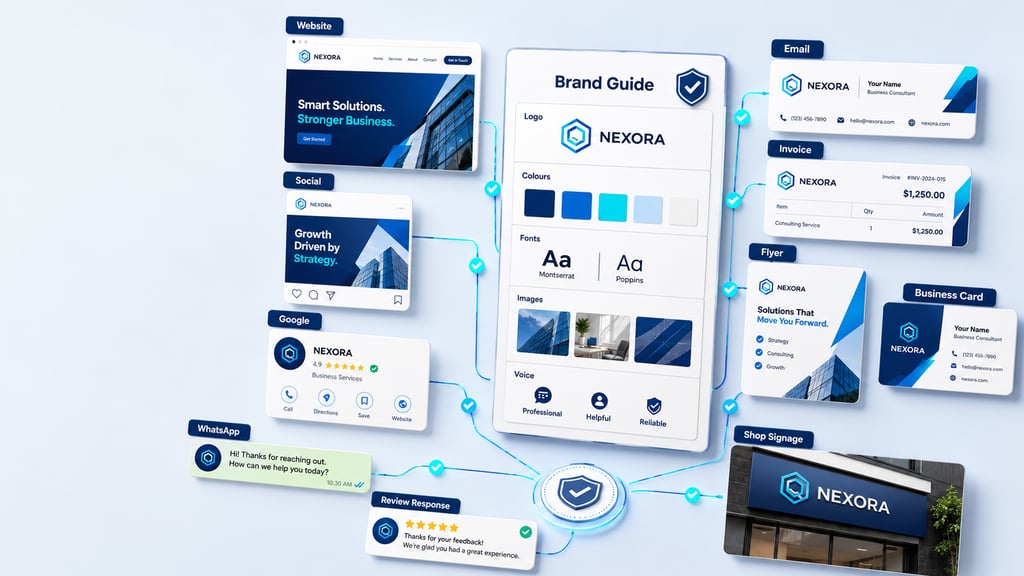
Brand consistency means your business looks, sounds and feels recognisable wherever customers find you. Your website, social media posts, Google Business Profile, email signatures, invoices, flyers, business cards and shop signage should all feel like they belong to the same company.
For small businesses, this matters more than many owners realise. Customers often encounter your brand in fragments: a Google search result, an Instagram post, a Facebook recommendation, a website homepage, a review response or a WhatsApp message. If each touchpoint looks different, uses different wording or gives a different impression, customers may feel unsure about who they are dealing with.
A consistent brand creates familiarity. Familiarity builds recognition. Recognition helps build trust. Trust makes it easier for people to enquire, book, buy or recommend your business.
The business case is strong. DesignRush reports that 68% of companies said brand consistency contributed 10–20% to revenue growth, citing Marq research on consistent brand presentation. Marq also notes that the average revenue increase attributed to presenting a brand consistently is 10–20%.
For a small business, that does not mean a new logo alone will suddenly increase revenue. It means a clear, professional and consistent identity can support every part of your marketing: awareness, trust, recall, enquiries and repeat business.
Key Elements of a Brand Style Guide
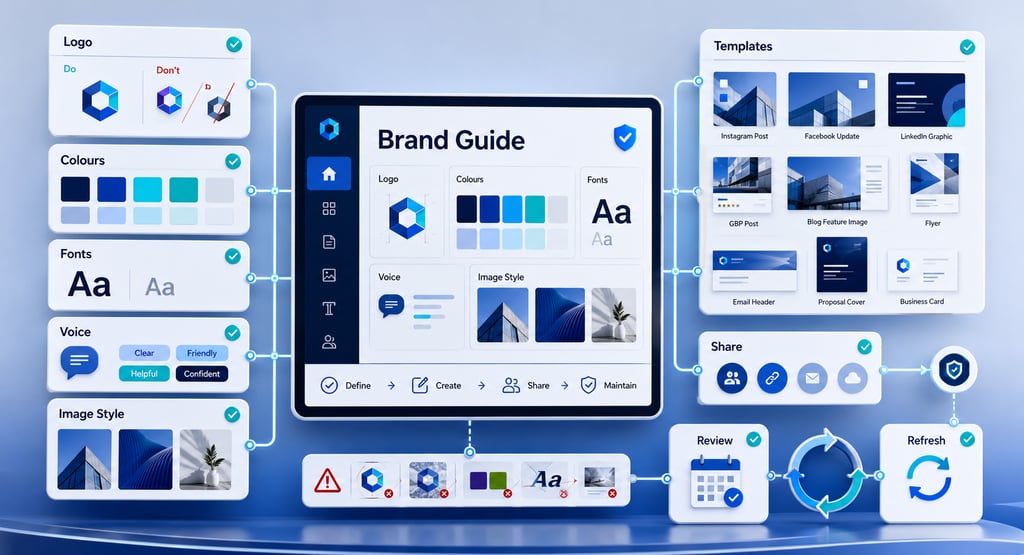
A brand style guide is a simple document that explains how your brand should appear and communicate. Adobe describes a brand style guide as a way to ensure consistent brand identity, covering everything from brand voice to typography.
Canva’s guide explains that brand identity guidelines can include logos, colours, fonts, images, icons, mission, vision, values, voice, tone, formatting preferences, copy guidelines, templates and points of contact.
For small businesses, your style guide does not need to be complicated. It should be clear enough that anyone creating content for your business can follow it.
Logo Usage
Your logo is often the most visible part of your brand. Your guide should include:
Primary logo.
Secondary or simplified logo.
Logo colours.
Logo spacing.
Logo size rules.
Versions for light and dark backgrounds.
Incorrect logo uses to avoid.
For example, if your logo should never be stretched, placed on a busy background or recoloured, say so clearly.
Colour Palette
Your colour palette should include your main brand colours and supporting colours. Add colour codes such as HEX values for digital use and CMYK values for print where needed.
A consistent palette helps your website, social media posts, banners, brochures and graphics feel connected.
Fonts and Typography
Choose fonts for headings, body copy and accents. Include instructions for when each font should be used.
For example:
Heading font: bold and modern.
Body font: clean and easy to read.
Accent font: used sparingly for quotes or highlights.
Typography is not only about style. It affects readability, professionalism and accessibility.
Imagery and Graphics
Your guide should explain the style of photos and graphics that suit your brand.
Should your images feel bright and friendly? Premium and minimal? Warm and local? Bold and energetic? Calm and professional?
Also include rules for:
Photography style.
Image filters.
Icons.
Illustrations.
Social media templates.
Before-and-after images.
Team photos.
Product photos.
Tone of Voice
Your brand voice is how your business sounds in writing. Studio Noel notes that brand guidelines often cover tone of voice along with mission, positioning, identity and values so the brand can be communicated consistently across channels.
A law firm may sound calm, precise and authoritative. A children’s party business may sound playful and energetic. A premium home-care service may sound reassuring, discreet and professional. A digital marketing company may sound practical, clear and supportive.
Your tone guide should include examples of words to use and words to avoid.
Mission, Values and Message
Your guide should include a short description of what your business does, who it helps and what makes it different. This keeps your website copy, social captions and Google Business Profile updates aligned.
How Inconsistent Branding Erodes Trust
Inconsistent branding is not just a design issue. It can create doubt.
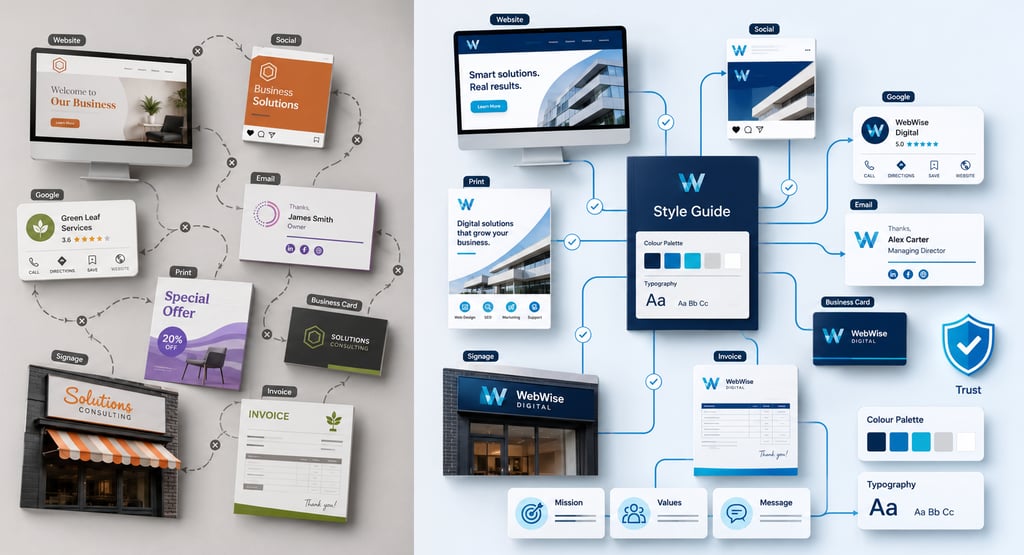
Imagine a customer sees a polished Instagram post, clicks through to an outdated website, finds a different logo on the contact page and then receives an email with another colour scheme and tone. Nothing may be “wrong,” but the experience feels disjointed.
That friction can make the business seem less organised.
DesignRush highlights inconsistency across logos, colours and messaging as a common branding mistake, noting that it can confuse customers, dilute recognition and undermine efforts to build a memorable identity. BrandLife also describes brand management as the ongoing process of shaping perception across touchpoints and states that inconsistent branding erodes revenue and customer trust.
For small businesses, inconsistency often happens for practical reasons:
A logo is used in different colours.
Old flyers still use outdated branding.
Social media posts use random templates.
The website does not match the business cards.
Staff write captions in different tones.
The Google Business Profile description sounds generic.
Email signatures are inconsistent.
Photos look mismatched.
Ads do not resemble the landing page.
These details matter because customers use them as trust signals. A consistent brand says, “We are organised, reliable and professional.” An inconsistent brand may unintentionally say, “We are still figuring things out.”
Why Consistency Matters Online and Offline
A customer’s journey does not stay in one place. They may discover you on Google, compare you on social media, visit your website, read reviews, send a message and later walk into your store.
Your branding should guide them smoothly through that journey.
Website
Your website should be the clearest expression of your brand. The logo, colours, fonts, photos, headings, buttons and tone should all support the same message.
If your business is premium, the site should feel polished. If your brand is friendly and local, the copy should feel warm and approachable. If you sell professional services, the layout should feel trustworthy and easy to navigate.
Social Media
Social media is where inconsistency often appears first. Quick posts, reused templates and last-minute promotions can cause a scattered look.
A style guide helps you create posts that feel connected, even when the topics change. It also makes it easier to repurpose content across Instagram, Facebook, LinkedIn, TikTok and Google Business Profile updates.
Google Business Profile
Your Google Business Profile is often a customer’s first impression in local search. Your photos, business description, review responses, posts and service listings should match the tone and professionalism of your website.
If your website feels premium but your Google profile has blurry photos and outdated information, the customer experience becomes weaker.
Print and Physical Touchpoints
Branding also matters offline. Flyers, signage, packaging, uniforms, menus, appointment cards, quotations and invoices should all feel connected to your digital presence.
The goal is simple: wherever customers meet your business, they should recognise it.
Steps to Create and Implement Your Own Style Guide
A practical brand guidelines template can start small. You can build it as a PDF, Google Doc, Canva file or internal webpage.
Step 1: Define Your Brand Foundation
Write down:
What your business does.
Who you serve.
What problem you solve.
Why customers choose you.
What personality your brand should express.
What values guide your service.
This foundation helps every visual and written decision make sense.
Step 2: Gather Your Current Brand Assets
Collect your current logo files, colours, fonts, social templates, photos, icons and marketing materials. Look for inconsistencies.
Ask:
Do our materials look like one brand?
Are we using the same logo everywhere?
Are colours consistent?
Does our website match our social media?
Does our tone sound the same across platforms?
This quick audit will show what needs tightening.
Step 3: Choose Your Core Visual Rules
Document your approved logo, colours, fonts and image style. Keep this simple and usable.
Include examples of what to do and what not to do. Canva recommends showing correct and incorrect logo usage because clear examples help prevent brand assets from being misused.
Step 4: Define Your Tone of Voice
Write three to five words that describe your brand voice. For example:
Friendly.
Expert.
Practical.
Calm.
Premium.
Playful.
Direct.
Supportive.
Then include sample sentences.
Instead of saying:
“We offer innovative solutions for your digital needs.”
A clearer WebWise-style version might be:
“We help small businesses build websites, content and online profiles that are clear, professional and easier to manage.”
Step 5: Create Templates
Templates save time and improve consistency. Create templates for:
Instagram posts.
Facebook updates.
LinkedIn graphics.
Google Business Profile posts.
Blog feature images.
Quote graphics.
Email headers.
Flyers.
Presentations.
Proposals.
Templates help your team create faster without drifting away from the brand.
Step 6: Share the Guide With Everyone
A style guide only works if people use it. Share it with staff, designers, copywriters, social media managers, printers, photographers and freelancers.
Make sure everyone knows where to find the latest version. Canva notes that hosting a style guide online can make updates easier to manage across a team.
Monitoring and Updating Your Branding Over Time
A brand style guide is not a one-time document. Your business will grow, your services may change and your audience may evolve.
Canva notes that a visual style guide is not a “one and done” project and that brands should plan for future refreshes as they evolve.
Review your branding at least once or twice a year. Check:
Website pages.
Social media templates.
Google Business Profile photos and posts.
Email signatures.
Printed materials.
Proposals and invoices.
Business cards.
Ads and landing pages.
Staff bios.
Review responses.
Service descriptions.
Look for anything outdated, off-brand or inconsistent.
A brand refresh does not always mean changing everything. Sometimes it means cleaning up what already exists: improving image quality, rewriting service descriptions, updating templates, simplifying colours or making your tone clearer.
Common Small Business Branding Mistakes
Avoid these common traps:
Using too many colours
A scattered palette makes your brand look less professional.
Changing fonts constantly
Too many fonts create visual noise and reduce readability.
Using low-quality images
Blurry or mismatched photos weaken trust.
Copying competitors
Your brand should reflect your own audience, values and offer.
Ignoring tone of voice
Visuals matter, but words shape how customers feel about you.
Not updating old materials
Outdated logos or old offers create confusion.
Treating branding as decoration
Branding is not only how things look. It is how your business is recognised and remembered.
How WebWise Management Can Help
Many small businesses know their branding needs work but are unsure where to start. You may have a logo, a website and social media pages, but no clear system holding everything together.
WebWise Management can help develop a cohesive brand presence that works across your website, social media and Google Business Profile. This may include:
Brand identity review.
Logo and visual consistency checks.
Website design updates.
Colour and font recommendations.
Social media templates.
Google Business Profile visual improvements.
Brand voice development.
Service page copywriting.
Blog and content style alignment.
Practical brand style guide creation.
The aim is to help your business look more professional, sound more consistent and build trust faster.
Final Thoughts
Consistent branding is not about being rigid. It is about being recognisable.
When your logo, colours, fonts, images and voice work together, customers experience your business as polished and trustworthy. That trust supports recognition, loyalty and revenue growth.
A small business style guide gives you the structure to keep your brand consistent across every platform: website, social media, Google Business Profile, email, print and customer communication.
Need help building a brand that looks professional everywhere customers find you? Contact WebWise Management for brand identity and website design support. We can help create a clear, consistent style guide that strengthens your online presence and gives your business a more confident, memorable identity.

Contact
Reach out anytime for personalized support.
Email:
Phone:
+27 72 709 7557
© 2026. All rights reserved.