
Which Social Media Platform Should Your Small Business Use? 2026 Guide
Instagram, TikTok, LinkedIn or Facebook? Compare social platforms using real data and learn which network fits your business best.
WebWise Management
6/29/20267 min read
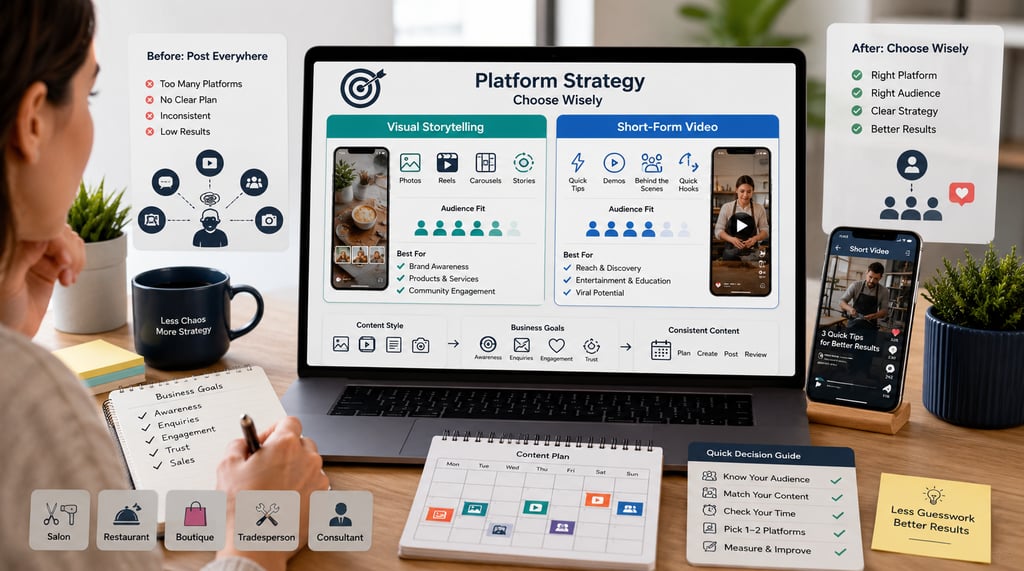
Many small businesses feel pressure to be everywhere: Facebook, Instagram, TikTok, LinkedIn, YouTube, WhatsApp and whatever platform becomes popular next. But being everywhere is not the same as being effective.
The best social media platform for your small business depends on your audience, content style, sales process and goals. A restaurant may get strong results from Instagram Reels and Facebook community posts. A consultant may benefit more from LinkedIn. A boutique might use Instagram and TikTok to show products visually. A tradesperson may get better traction from Facebook, local groups and short educational videos.
Social media is too important to ignore. DataReportal’s 2026 global overview reports 5.66 billion active social media user identities worldwide, equal to 68.7% of the global population. Its mid-year 2026 update later placed the figure at 5.79 billion user identities, showing continued growth. These are “user identities,” not necessarily unique people, but the scale is still clear: your customers are likely active somewhere on social media. (datareportal.com, datareportal.com)
Gitnux’s 2026 small-business social media statistics report that 91% of small businesses with fewer than 10 employees actively use social media for marketing, 89% consider social media crucial for brand awareness and 67% use user-generated content regularly. Treat these figures as industry benchmarks rather than official platform data, but they reflect a practical truth: social media is now a normal part of small-business marketing. (gitnux.org)
The real question is not, “Should we use social media?” It is, “Which platforms deserve our time?”
Instagram: Visual Storytelling and Reels
Instagram is a strong choice for businesses that can show rather than only tell. It works especially well for restaurants, salons, retailers, cafés, fitness studios, wellness brands, travel businesses, property services, creatives and personal brands.
Gitnux reports that 73% of U.S. small businesses use Instagram weekly to connect with customers. Sprout Social’s 2026 Instagram statistics also note that Instagram has around 3 billion monthly active users and that Reels made up more than half of ads shared on Instagram in 2025. (gitnux.org, sproutsocial.com)
Instagram is best for:
Before-and-after transformations.
Product photos and short demos.
Reels showing tips, processes or results.
Behind-the-scenes content.
Customer testimonials.
Staff introductions.
Stories for daily updates.
Carousels that teach or compare.
For example, a salon can share colour transformations, client preparation tips and stylist advice. A restaurant can show menu items, kitchen preparation and customer atmosphere. A boutique can post outfit ideas, new arrivals and customer styling clips.
Instagram also works well for building trust over time. A customer may not book after one post, but repeated exposure to helpful, attractive and authentic content can make the business feel familiar.
Best for: visual businesses, lifestyle brands, local retailers, beauty, food, fitness, events and service providers with strong imagery.
Watch out for: needing consistent visuals. A neglected Instagram page can quickly look inactive.
TikTok: Short-Form Video and Viral Potential
TikTok is built around short-form video, discovery and entertainment. It is useful for businesses willing to be creative, informal and helpful.
The platform is often associated with younger audiences, but its influence has expanded beyond dance trends and entertainment. Many users now search TikTok for product recommendations, tutorials, places to visit, local services and honest experiences.
Gitnux reports that 82% of small retailers had adopted TikTok for promotional content creation by mid-2023. Again, treat this as an industry benchmark, but it shows why retailers and product-led brands are taking TikTok seriously. (gitnux.org)
TikTok is best for:
Quick tips.
Product demonstrations.
“Day in the life” clips.
Behind-the-scenes videos.
Myth-busting content.
Customer questions.
Trend-based local content.
Educational mini-guides.
Personality-driven brand content.
For example, a mechanic could post “three signs your brakes need checking.” A bakery could show the making of a popular cake. A fitness studio could share beginner-friendly exercises. A property service business could explain what owners should check before renting out a holiday home.
In the Instagram vs TikTok marketing debate, the key difference is usually style. Instagram often rewards polished visual consistency, while TikTok rewards authenticity, speed and strong hooks. Both can use short video, but TikTok usually gives businesses more room to be conversational and less formal.
Best for: retailers, restaurants, creators, product businesses, fitness, beauty, local brands with personality and businesses that can teach through short clips.
Watch out for: inconsistency. TikTok often requires experimentation, frequent posting and comfort on camera.
LinkedIn: Professional Networking for Micro-Businesses
LinkedIn is often overlooked by small businesses because it feels corporate. But for consultants, agencies, accountants, recruiters, coaches, B2B service providers and professional firms, LinkedIn can be one of the most valuable platforms.
Gitnux reports that 45% of micro-businesses use LinkedIn for networking and marketing. LinkedIn is also growing globally: current 2026 industry reports place LinkedIn at more than 1.2 billion to 1.3 billion registered members, although active monthly use is lower than registered membership. (gitnux.org, leadfeeder.com)
LinkedIn for micro-businesses works because decision-makers use the platform professionally. You do not need viral content to succeed. You need credibility, clarity and consistency.
LinkedIn is best for:
Thought leadership.
Business tips.
Case studies.
Founder stories.
Client results.
Industry commentary.
Professional service explanations.
Educational posts.
Networking and referrals.
For example, a website agency can post about service pages that convert. A consultant can share lessons from client work. An accountant can explain tax preparation tips. A recruiter can discuss hiring trends. A property professional can share market insights.
LinkedIn content can be more text-driven than Instagram or TikTok. Strong posts often tell a story, explain a lesson or share a practical framework.
Best for: B2B services, consultants, coaches, agencies, accountants, recruiters, professional services and founders building authority.
Watch out for: sounding too formal. The best LinkedIn content is professional but still human.
Facebook: Local Community Engagement
Facebook remains highly relevant for many local businesses, especially those serving communities, neighbourhoods and repeat customers.
Pew Research Center’s 2025 social media fact sheet shows Facebook remains one of the most widely used social platforms among U.S. adults, second only to YouTube. Pew reports that 71% of U.S. adults say they use Facebook, while 50% use Instagram and 37% use TikTok. (pewresearch.org)
Facebook is valuable because it supports local groups, events, reviews, recommendations, Messenger conversations and community updates. It is especially useful for tradespeople, restaurants, shops, local service providers, family businesses, community organisations and businesses with older or mixed-age audiences.
Facebook is best for:
Local announcements.
Community group visibility.
Events.
Customer reviews.
Service updates.
Offers and promotions.
Photo albums.
Messenger enquiries.
Educational posts.
Local recommendations.
A plumber can post seasonal maintenance tips in a local community group. A restaurant can promote weekend specials. A retailer can announce new stock. A home service business can share recent work and customer reviews.
Facebook may not feel as trendy as TikTok, but it is still practical. For many local businesses, it is where customers ask for recommendations, check opening hours and send messages.
Best for: local services, community businesses, trades, restaurants, retailers, events, family-focused brands and businesses with broad age ranges.
Watch out for: low organic reach on business pages. Groups, paid boosts and engagement-focused content may be needed.
Choosing Platforms Based on Audience and Goals
A strong social media strategy 2026 starts with your business goal.
If You Want Brand Awareness
Instagram, TikTok and Facebook are usually strong options. Use short video, visual storytelling, behind-the-scenes clips and customer content.
If You Want Local Enquiries
Facebook and Instagram are often practical, especially when linked to Messenger, WhatsApp, booking pages or Google Business Profile posts.
If You Want B2B Leads
LinkedIn should usually be part of the mix. Use case studies, founder-led posts, educational content and direct relationship building.
If You Sell Products
Instagram and TikTok are strong for discovery, while Facebook can support community and repeat customers.
If You Provide Expert Services
LinkedIn, Facebook and Instagram can all work, depending on your audience. The content should focus on education, trust and proof.
Which Social Media Platform Is Best for Your Small Business? A Data-Driven Guide
Why Your Business Needs a Platform Strategy
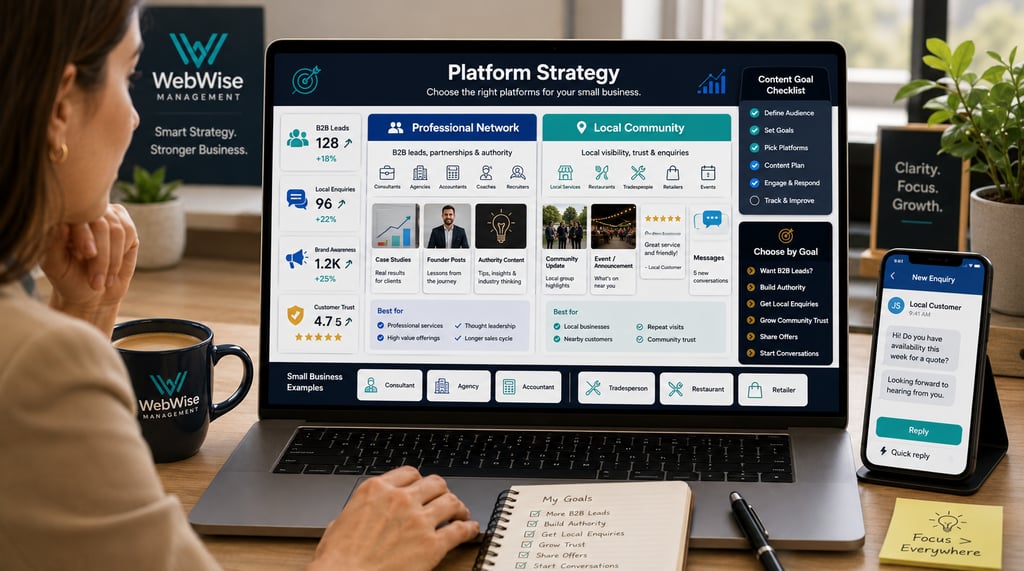
If You Have Limited Time
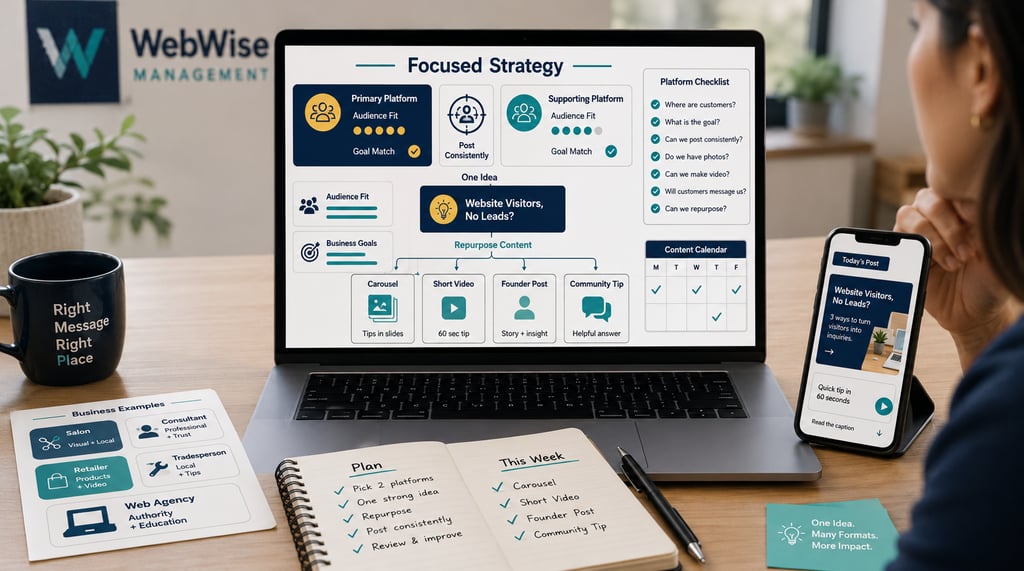
Choose one primary platform and one supporting platform. For example:
Salon: Instagram primary, Facebook supporting.
Restaurant: Instagram primary, Facebook supporting.
Consultant: LinkedIn primary, Facebook or Instagram supporting.
Retailer: Instagram primary, TikTok supporting.
Tradesperson: Facebook primary, Instagram supporting.
Web agency: LinkedIn primary, Instagram or Facebook supporting.
It is better to post consistently on two platforms than inconsistently on six.
Content Styles That Work by Platform
Here is a simple comparison.
Instagram: polished visuals, Reels, carousels, Stories, testimonials, behind-the-scenes content.
TikTok: informal short videos, quick tips, trends, demonstrations, educational clips, founder personality.
LinkedIn: professional insights, business stories, case studies, lessons learned, industry commentary.
Facebook: local updates, community posts, offers, customer reviews, events, practical advice and Messenger support.
The same idea can be adapted across platforms. For example, a blog post called “Why Your Website Gets Visitors but No Leads” could become:
Instagram carousel: “7 reasons your website is not converting.”
TikTok video: “The biggest mistake small-business websites make.”
LinkedIn post: “Traffic does not equal leads. Here is what to fix.”
Facebook post: “Getting website visits but no calls? Here are common issues.”
This is how small businesses save time: one strategy, adapted for each platform.
Final Platform Decision Checklist
Before choosing your platforms, ask:
Where do my customers spend time?
Is my business visual, educational, professional or community-based?
Do I need awareness, leads, bookings, sales or trust?
Can I create video consistently?
Do I have good photos?
Will customers message me on this platform?
Can I respond quickly?
Do I have time to post and engage?
Can one piece of content be repurposed across channels?
Your answer should guide your platform mix.
How WebWise Management Can Help
Choosing the right platform is only the first step. Small businesses also need a content plan, posting schedule, captions, visuals, video ideas, engagement strategy and performance review.
WebWise Management can help develop a tailored social media strategy based on your audience, business goals and available resources. That may include platform selection, content planning, caption writing, post scheduling, blog repurposing, short-form video ideas, Google Business Profile updates and monthly reporting.
The goal is not to chase every trend. The goal is to put your business in the right places with the right message.
Final Thoughts
There is no single best social media platform for every small business. Instagram, TikTok, LinkedIn and Facebook each serve different audiences and goals.
Instagram is strong for visual storytelling. TikTok is powerful for short-form discovery. LinkedIn builds professional authority. Facebook supports local community engagement.
The smartest strategy is focused, not frantic. Choose the platforms that match your customers, your content style and your business objectives. Then show up consistently with content that helps, informs and builds trust.
Need help choosing the right platforms and creating a manageable plan? Contact WebWise Management for social media strategy and management services designed for small businesses that want clarity, consistency and better results.
Contact
Reach out anytime for personalized support.
Email:
Phone:
+27 72 709 7557
© 2026. All rights reserved.