
User-Generated Content: Turn Customers into Your Marketing Team
User-Generated Content: Turn Customers into Your Marketing Team
WebWise Management
7/1/20268 min read

From Customers to Content Creators: Leveraging User-Generated Content for Trust and Sales
Why UGC Is the Most Trusted Content
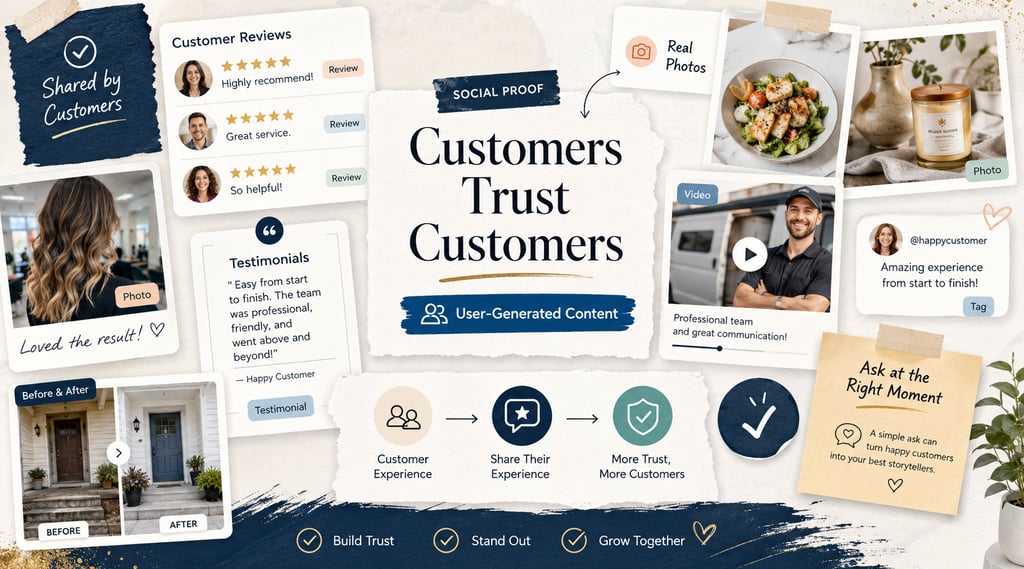
Customers trust other customers.
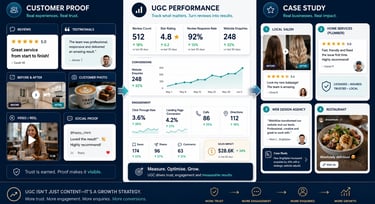
That simple truth is why user-generated content, or UGC, has become such a powerful marketing asset for small businesses. UGC includes reviews, testimonials, customer photos, videos, social media tags, before-and-after posts, unboxing clips, Google reviews and any other content created by real people who have experienced your business.
For local and service-based businesses, UGC works because it feels authentic. A polished advert can explain what you offer, but a genuine customer review shows that someone else has already trusted you and had a positive experience.
Nielsen’s widely cited Global Trust in Advertising research found that 92% of consumers around the world trusted earned media, such as word-of-mouth recommendations from friends and family, above all other forms of advertising. More recent Nielsen research still places recommendations from people customers know as the most trusted advertising channel, at 88%.
That is the power of social proof marketing. When potential customers see real people using, reviewing or recommending your business, they feel safer taking the next step.
UGC also connects directly to conversions. EmbedSocial’s UGC statistics compilation reports that UGC can increase conversions by 102% in an online buying process, 93% of consumers consult customer reviews and recommendations before buying, and on-site reviews can increase conversions by 74%.
For small businesses, this means your happiest customers may already be creating some of your most persuasive marketing content. The opportunity is to encourage it, collect it, organise it and display it where future customers can see it.
Types of UGC: Reviews, Photos, Testimonials and Videos
UGC does not have to be complicated. In fact, the best examples often come from everyday customer experiences.
Customer Reviews
Reviews are one of the most important forms of UGC because they appear close to the point of decision. A customer searching for a local plumber, salon, restaurant, clinic, web designer or property service provider may read reviews before calling or booking.
BrightLocal’s 2026 Local Consumer Review Survey found that 97% of consumers read reviews for local businesses, showing how central reviews have become in local decision-making.
Reviews help answer questions such as:
Can I trust this business?
Do they deliver what they promise?
Are they professional?
Do they respond when something goes wrong?
Have other people like me had a good experience?
Customer Photos
Photos add proof. For retailers, restaurants, salons, fitness studios, property services and home improvement businesses, customer images can be highly persuasive.
A restaurant can share customer photos of meals. A salon can show hair transformations. A boutique can repost customers wearing products. A cleaning company can share before-and-after images, with permission. A holiday home caretaker can show inspection-ready spaces or property care details.
Real photos help potential customers imagine their own experience.
Testimonials
Testimonials are more structured than reviews. They are usually longer, more detailed and often placed on websites, landing pages, brochures or social media graphics.
A strong testimonial explains:
What problem the customer had.
Why they chose the business.
What the experience was like.
What result they received.
Why they would recommend the business.
These details turn a simple compliment into a persuasive story.
Customer Videos
Video UGC can be especially powerful because it shows emotion, tone and personality. A short customer clip saying, “I was nervous about booking, but the team made everything easy,” can feel more convincing than a paragraph of brand copy.
Video can include:
Customer testimonials.
Product reviews.
Service experience clips.
Event reactions.
Before-and-after reels.
User demonstrations.
Behind-the-scenes customer moments.
You do not need perfect production. Authenticity often matters more than polish.
Encouraging Customers to Share Their Stories
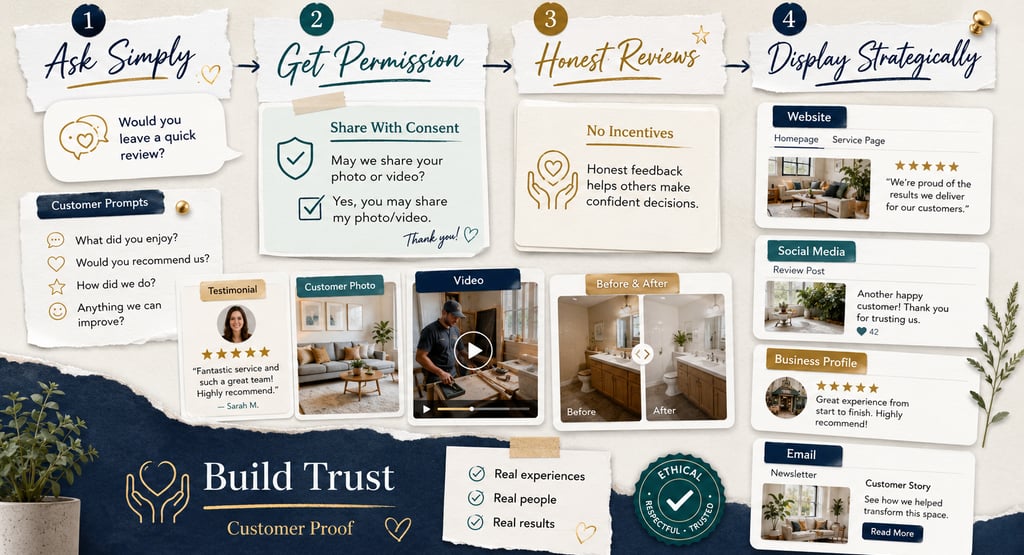
A good UGC strategy for small business starts by making it easy and comfortable for customers to participate.
Many customers are happy to leave reviews or share photos, but they need a prompt. If you never ask, they may simply move on.
Ask at the Right Moment
The best time to request UGC is when the customer is happiest. This might be:
After a successful appointment.
After a product is delivered.
After a project is completed.
After a positive message or compliment.
After a customer tags you online.
After repeat business.
After a problem has been resolved well.
Timing matters because the experience is still fresh.
Make the Request Simple
Avoid long, awkward requests. Keep it warm and direct.
Example:
“Thank you for choosing us. We’re so glad you were happy with the service. Would you mind leaving us a quick Google review? It really helps other local customers find and trust our business.”
For photo or video UGC:
“We loved seeing your results. Would you be comfortable with us sharing your photo on our social media? We’ll tag you if you’d like, or keep it anonymous.”
Always ask permission before reposting customer images, videos or testimonials.
Give Customers Prompts
Some people want to help but do not know what to write. Offer simple prompts:
What service did you use?
What problem did we help solve?
What did you enjoy about the experience?
Would you recommend us to others?
What result did you get?
This helps customers create more useful content without feeling pressured.
Do Not Offer Incentives for Google Reviews
It may be tempting to offer discounts or freebies for reviews, but this can create policy problems. Google states that reviews must reflect genuine experiences and that offering incentives, such as free or discounted goods or services in exchange for reviews, is considered fake and misleading content.
The safest approach is to ask real customers for honest feedback, not positive feedback.
Authenticity matters. The U.S. Federal Trade Commission has also introduced a final rule targeting fake reviews and testimonials, including the sale or purchase of fake consumer reviews.
Trust is the whole point of UGC. Do not damage it by trying to manufacture proof.
Displaying UGC on Your Website, Social Media and Google Profile
Collecting UGC is only half the work. You also need to display it where it supports customer decisions.
On Your Website
Your website should use UGC strategically, especially on pages where visitors are deciding whether to enquire or buy.
Useful places include:
Homepage.
Service pages.
Product pages.
Landing pages.
Contact page.
Booking page.
Checkout page.
Case study pages.
About page.
For example, a service page for “Website Redesigns” could include a short client testimonial near the call-to-action. A salon’s colour treatment page could include before-and-after images. A property caretaker’s inspection service page could include owner testimonials about peace of mind.
On-site reviews are valuable because they reduce uncertainty at the exact moment a customer is considering action. EmbedSocial’s UGC statistics compilation reports that on-site reviews can increase conversions by 74%.
On Social Media
Social media is ideal for showcasing customer stories in a more visual, conversational way.
You can post:
Review screenshots.
Customer photo reposts.
Testimonial graphics.
Short video reactions.
Before-and-after reels.
“Customer of the month” features.
User tags in Stories.
Client success snapshots.
Add context to make the content more meaningful. Instead of only posting a review screenshot, write a short caption explaining what problem the customer had and how your business helped.
Example:
“This client came to us because their website looked outdated and was not generating enquiries. After refreshing the layout and rewriting the service pages, they had a clearer message and stronger calls-to-action. Thank you for the kind review!”
On Your Google Business Profile
For local businesses, Google Business Profile is one of the most important places for UGC because reviews appear directly in Search and Maps.
Encourage customers to leave honest reviews, respond professionally and keep your profile active with photos and updates. BrightLocal’s 2026 survey found that consumers read reviews for local businesses at very high rates, making review management a key part of local trust.
Google reviews can support both credibility and local visibility. They also help customers compare businesses quickly.
In Email Marketing
UGC can also strengthen email campaigns.
Examples:
Add a customer testimonial to a newsletter.
Share a recent review in a promotional email.
Include before-and-after photos in a service update.
Use customer questions as email topics.
Send a case study to leads who are still deciding.
This turns customer proof into a useful nurture tool.
Measuring the Impact of UGC on Conversions
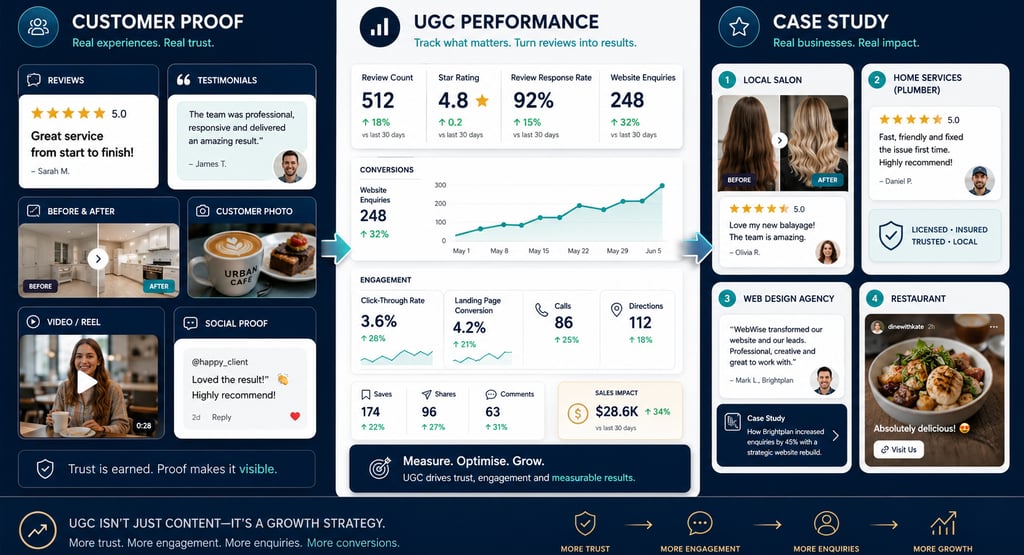
UGC should feel human, but it should also be measured. Small businesses can track whether customer content is helping people take action.
Start with simple metrics:
Review count.
Average star rating.
Review response rate.
Website enquiries.
Click-throughs from testimonial sections.
Product page conversion rate.
Social media saves, shares and comments.
Google Business Profile calls and direction requests.
Landing page conversion rate.
Sales connected to UGC campaigns.
For e-commerce businesses, compare product pages with reviews against those without reviews. For service businesses, compare landing pages that include testimonials with pages that do not.
EmbedSocial’s compilation also notes that 43% of online shoppers say customer reviews are very helpful, reinforcing how important review visibility can be during the buying process.
The goal is not only to gather more reviews. The goal is to use customer proof where it helps future customers feel confident.
Case-Study Style Examples
The Local Salon
A salon asks happy clients for permission to share before-and-after photos. Each post includes the treatment type, stylist name and a short client comment.
The salon then adds these photos to its Instagram Reels, website service pages and Google Business Profile. Future clients see real results, not only stock images. This builds confidence before they book.
The Home Service Business
A plumber starts sending a review link after each completed job. The request is simple, polite and sent while the experience is fresh.
The business then features review snippets on its emergency plumbing page and posts “review of the week” updates on Facebook. New customers searching locally see consistent proof of reliability.
The Web Design Agency
A small-business website client shares that the new site helped them explain their services more clearly and receive better enquiries.
The agency turns that feedback into a short case study, a LinkedIn post, a website testimonial and a Google Business Profile update. One customer story becomes four pieces of trust-building content.
The Restaurant
A restaurant encourages diners to tag the business in food photos. With permission, it reposts the best images to Stories and adds them to highlight sections such as “Customer Favourites” and “Weekend Specials.”
Potential diners see real meals from real guests, which feels more authentic than promotional food photography alone.
UGC Best Practices for Small Businesses
To make UGC work well, follow a few simple rules.
Be authentic. Use real feedback from real customers.
Ask permission before sharing photos, names or videos.
Respond to reviews, including negative ones.
Do not pressure customers to leave only positive feedback.
Make review links easy to access.
Show UGC on high-intent pages.
Use customer language in your marketing.
Turn strong reviews into social posts.
Track how UGC affects enquiries and sales.
Keep collecting UGC consistently, not only during campaigns.
UGC works best when it becomes part of your normal marketing system.
How WebWise Management Can Help
Many small businesses already have happy customers, good reviews and useful testimonials. The problem is that this proof is scattered across platforms, buried in inboxes or not being used strategically.
WebWise Management can help create a practical UGC system that supports trust and sales.
This may include:
Review request strategy.
Google Business Profile review management.
Testimonial collection.
Website testimonial sections.
Case study writing.
Social media UGC planning.
Customer story graphics.
Review response support.
Content repurposing.
Reputation management reporting.
The aim is to turn customer feedback into a reliable marketing asset, while keeping it ethical, authentic and aligned with your brand.
Final Thoughts
Your customers may be your most convincing marketers.
Reviews, photos, testimonials and videos give future buyers something your own advertising cannot fully create: proof from real people. That proof builds trust, reduces hesitation and helps customers feel more confident choosing your business.
For small and local businesses, user-generated content is not just a trend. It is modern word-of-mouth. When collected and displayed properly, it can support your website, social media, Google Business Profile and sales process.
Need help turning customer reviews and stories into trust-building content? Contact WebWise Management for reputation management and UGC strategy support that helps your business build credibility, showcase happy customers and convert more enquiries.
Contact
Reach out anytime for personalized support.
Email:
Phone:
+27 72 709 7557
© 2026. All rights reserved.