
Seasonal Marketing Strategies: Capturing Holiday Shoppers and Supporting Small Business Saturday
Learn how to build an effective seasonal marketing strategy for Black Friday, Cyber Monday, Small Business Saturday and Christmas. Discover practical tips for websites, email marketing, Google Business Profile optimisation and holiday promotions.
WebWise Management.
7/17/20265 min read
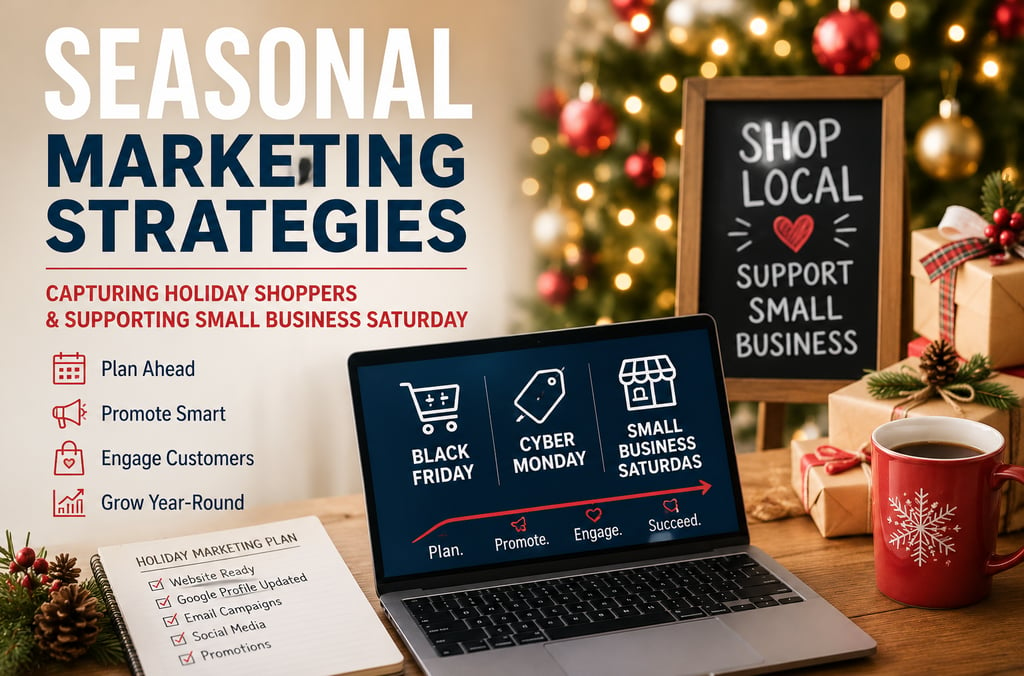
For many small businesses, the holiday season is the busiest and most profitable time of the year. Whether you run a retail store, restaurant, local service business, or online shop, customers actively search for gifts, special offers, festive experiences, and businesses they can trust.
Success during this period rarely happens by chance. Businesses that prepare well in advance are far more likely to attract customers, increase sales, and build lasting relationships than those that rely on last-minute promotions.
A well-planned seasonal marketing strategy helps you reach customers with the right message at the right time through your website, Google Business Profile, email campaigns, social media, and other digital marketing channels.
In this guide, we'll explore practical ways to prepare your business for Black Friday, Cyber Monday, Small Business Saturday, Christmas, and other seasonal opportunities while building long-term customer loyalty.
Why Seasonal Marketing Matters
Consumer behaviour changes dramatically during the holiday season.
People research products earlier, compare businesses more carefully, and often make purchasing decisions faster than at any other time of the year.
Rather than treating holiday marketing as a single event, successful businesses see it as a series of connected opportunities stretching from early planning through the New Year.
An effective seasonal marketing strategy helps businesses:
Increase visibility when buying intent is highest.
Generate additional revenue during peak shopping periods.
Reconnect with existing customers.
Attract new customers.
Build customer loyalty.
Create urgency through limited-time promotions.
Planning early also allows your website, social media, email marketing, and local SEO efforts to work together instead of competing for attention.
Understanding Holiday Shopping Trends
Holiday shopping continues to evolve as more consumers research businesses online before making a purchase.
According to the National Retail Federation (NRF), 91% of consumers plan to celebrate the winter holidays, with shoppers budgeting an average of $890 for gifts. Black Friday continues to attract enormous audiences, with approximately 80.3 million shoppers visiting stores and 85.7 million shopping online. By early December, consumers have already completed around 51% of their holiday shopping.
These statistics reinforce an important lesson:
Customers begin making purchasing decisions well before the holidays arrive.
Businesses that wait until Black Friday to start marketing often miss weeks of valuable customer attention.
Black Friday: More Than Big Discounts
Black Friday remains one of the year's largest shopping events.
While large retailers often compete aggressively on price, small businesses can compete differently.
Consider offering:
Product bundles
Limited-time offers
Early access for loyal customers
Gift vouchers
Complimentary services
Free delivery thresholds
Customers often value convenience, expertise, personalised service, and trust just as much as significant discounts.
Cyber Monday: Your Online Opportunity
Cyber Monday focuses primarily on online shopping.
If your website isn't ready before promotions begin, you may lose potential customers during one of the busiest online shopping periods of the year.
Before launching your campaigns, ensure your website has:
Fast loading speeds.
Mobile-friendly design.
Secure checkout or enquiry forms.
Clear product or service information.
Accurate pricing.
Easy navigation.
Even businesses without online stores can benefit by encouraging appointment bookings, enquiries, or gift voucher purchases.
Why Small Business Saturday Matters
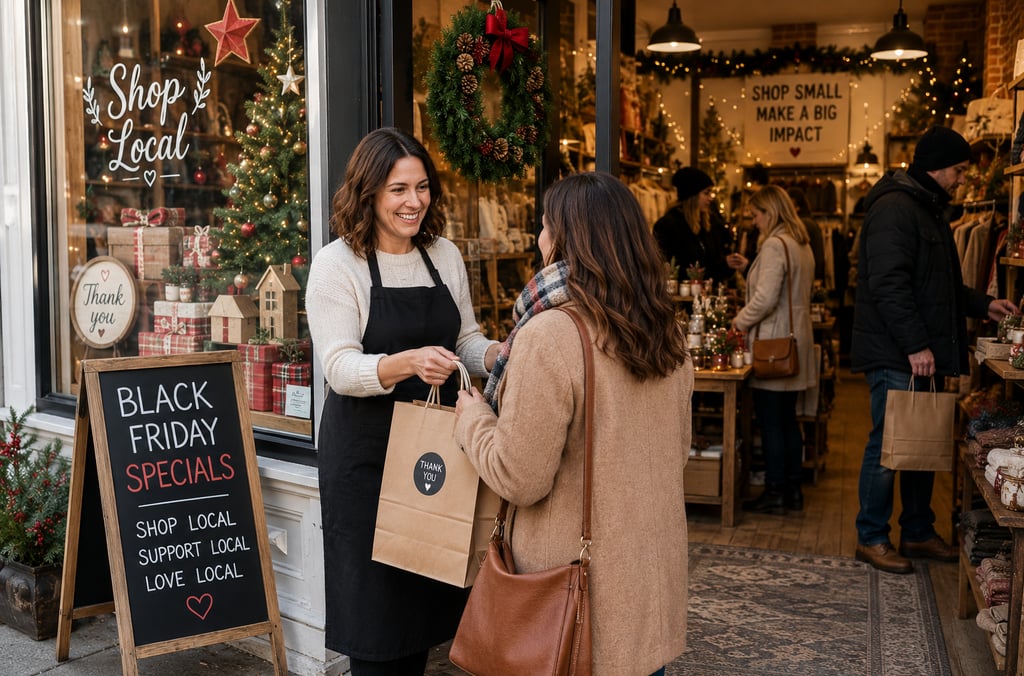
Positioned between Black Friday and Cyber Monday, Small Business Saturday encourages consumers to support independent local businesses.
Since the initiative began in 2010, consumers have spent an estimated $201 billion at participating small businesses. In 2023 alone, shoppers spent approximately $17.9 billion.
Research also indicates that 91% of consumers prefer supporting small businesses whenever possible.
For independent businesses, this represents a significant opportunity.
Unlike large retailers, local businesses can provide:
Personal service.
Community connections.
Expert advice.
Unique products.
Memorable customer experiences.
These advantages help build relationships that continue long after the holiday season ends.
Activity
Campaign planning
Website updates
Content creation
Launch email campaigns
Black Friday promotion
Small Business Saturday
Christmas campaigns
Last-order reminders
Thank-you campaign
Clearance promotions
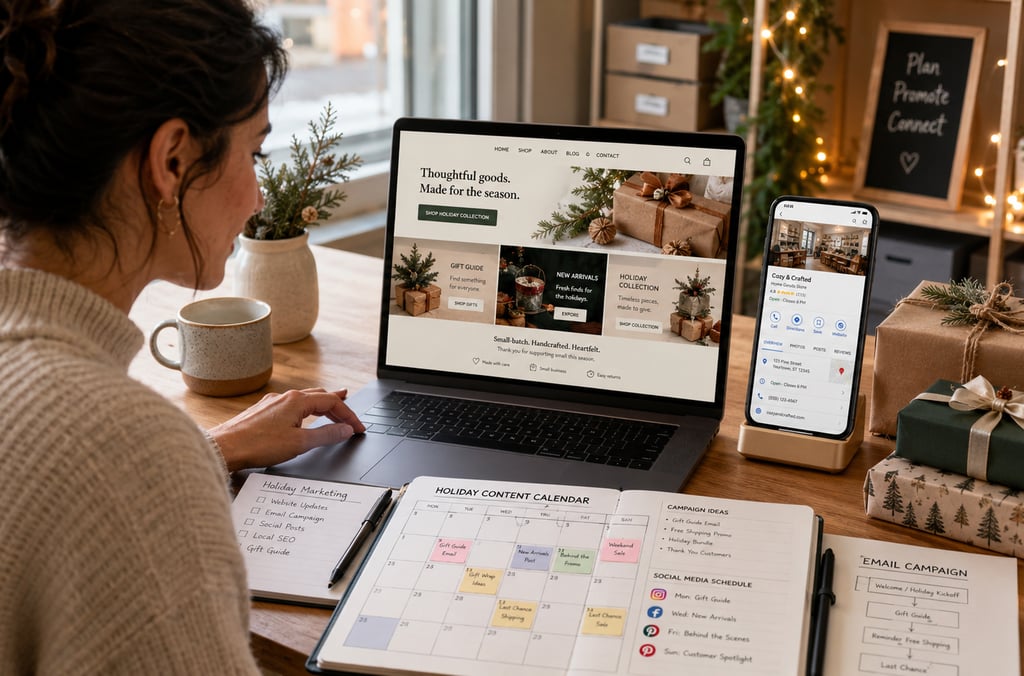
Prepare Your Website Before Holiday Traffic Arrives
Your website is often your customer's first impression.
Studies show that 62% of small business owners consider their website crucial for attracting customers, making it one of their most valuable marketing assets.
Before holiday traffic increases, review:
Homepage
Highlight your current promotions immediately.
Landing Pages
Create dedicated pages for:
Black Friday
Cyber Monday
Christmas promotions
Gift guides
Seasonal services
Contact Information
Verify:
Trading hours
Phone numbers
Addresses
Holiday closures
Website Performance
Test:
Loading speed
Mobile responsiveness
Contact forms
Booking systems
Checkout processes
Holiday traffic often exposes weaknesses that remain unnoticed during quieter periods.
Keep Your Google Business Profile Updated
Many holiday shoppers begin their search with Google.
Updating your Google Business Profile helps customers find accurate information when they need it most.
Before the holiday season:
Update holiday trading hours.
Add festive photos.
Publish seasonal updates.
Respond to customer reviews.
Verify contact details.
Showcase seasonal products or services.
A complete and accurate profile builds trust while improving local visibility.
Use Email Marketing to Stay Connected
Email remains one of the highest-performing digital marketing channels because it reaches customers who already know your business.
Rather than sending one promotional email, create a sequence.
For example:
Holiday announcement.
Gift guide.
Black Friday reminder.
Cyber Monday promotion.
Small Business Saturday invitation.
Final ordering reminder.
Post-holiday thank-you email.
Segmenting your audience allows you to send more relevant offers and improve engagement.
Plan Your Social Media Content Early
Businesses that prepare content in advance usually produce more consistent and engaging campaigns.
Create a seasonal content calendar that includes:
Product highlights.
Customer testimonials.
Gift ideas.
Behind-the-scenes content.
Countdown posts.
Limited-time promotions.
Staff introductions.
Community stories.
Scheduling content early gives you more time to interact with customers during busy periods.
Common Mistakes to Avoid
Many holiday campaigns fail because businesses:
Start planning too late.
Forget to update website information.
Ignore mobile users.
Send excessive promotional emails.
Use inconsistent branding.
Fail to monitor campaign performance.
Neglect local SEO.
Focus only on discounts instead of customer value.
Avoiding these mistakes creates a better customer experience and improves campaign performance.
Seasonal Marketing Checklist
Before launching your campaign, confirm that you have:
✓ Updated your website
✓ Created seasonal landing pages
✓ Updated your Google Business Profile
✓ Published holiday trading hours
✓ Scheduled email campaigns
✓ Planned your social media calendar
✓ Defined promotional offers
✓ Tested contact forms
✓ Checked mobile usability
✓ Reviewed customer reviews
✓ Prepared staff for increased enquiries
A simple checklist helps ensure that important tasks are not overlooked during busy trading periods.
Final Thoughts
Seasonal marketing isn't about chasing every holiday or offering the biggest discounts.
It's about understanding when your customers are ready to buy and making it easy for them to choose your business.
By planning early, optimising your website, maintaining an accurate Google Business Profile, creating targeted email campaigns, and staying active on social media, your business will be better positioned to take advantage of Black Friday, Cyber Monday, Small Business Saturday, and the wider festive shopping season.
If you'd like help developing a seasonal marketing strategy tailored to your business, WebWise Management can help. From website optimisation and local SEO to Google Business Profile management, email marketing, and coordinated holiday campaigns, we'll help you prepare with confidence and make the most of your busiest season.
Build a Seasonal Marketing Timeline
Rather than treating each holiday separately, create one coordinated campaign.
Timeline
Early October
Mid October
Late October
Early November
Mid November
Late November
Early December
Mid December
Late December
January
Contact
Reach out anytime for personalized support.
Email:
Phone:
+27 72 709 7557
© 2026. All rights reserved.