
Local SEO Essentials: How to Rank in Google’s Map Pack
Step-by-step guide to improving local SEO and optimizing your website, Google Business Profile, citations and reviews.
WebWise Management
5/17/20266 min read


Local SEO Essentials: Getting into Google’s Map Pack
Why the Map Pack Matters
When someone searches “plumber near me,” “coffee shop open now,” or “accountant in [town],” Google often shows a local map section with three highlighted business listings. This is commonly called the Google Map Pack, or local 3-pack.
For brick-and-mortar businesses, tradespeople and service providers, appearing here can be a major source of calls, website visits, direction requests and enquiries. The reason is simple: people making local searches usually have immediate intent. They are not just researching in theory. They are looking for a nearby business they can contact, visit or book.
Recent local SEO data shows how important this space is. Backlinko found that 42% of people searching for local terms click a result inside the Google Maps Pack, while other industry sources put Map Pack interaction in the low-to-mid 40% range.
Local search also drives real-world action. Google research found that 76% of people who search on a smartphone for something nearby visit a related business within a day, and 28% of those searches result in a purchase. Older local SEO benchmarks also commonly cite that 72% of local searchers visit a store within five miles, while 51% of “near me” searches result in a visit.
The message is clear: if your business depends on local customers, visibility in Google Search and Maps is not optional.
Understanding Proximity, Relevance and Prominence
Google says local results are mainly based on three factors: relevance, distance and prominence. There is no way to request or pay for a better local organic ranking, so businesses need to improve the quality and trustworthiness of their online presence.
Proximity refers to how close your business is to the searcher or to the location used in the search. You cannot control where someone searches from, but you can make sure your address, service area and location pages are accurate.
Relevance is how well your business matches the search. A complete Google Business Profile, accurate categories, clear service pages and useful website content all help Google and customers understand what you do.
Prominence is how well-known and trusted your business appears to be. Google says prominence can be influenced by information from across the web, including links, articles, directories and reviews. Google also notes that more reviews and positive ratings can help local ranking.
A strong local SEO strategy works on all three.
Generating and Managing Reviews
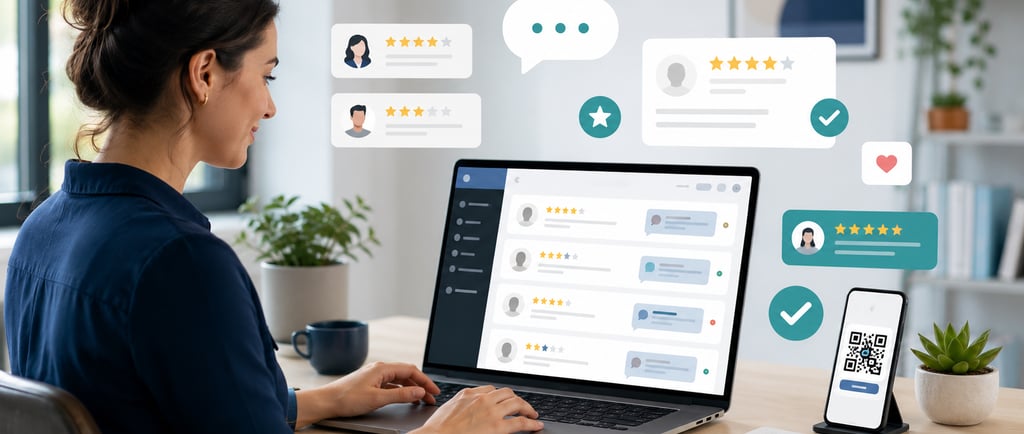
Reviews influence trust and visibility. Google says reviews can help your business stand out and give potential customers helpful information, and reviews appear beside Business Profiles in Maps and Search.
The best review strategy is simple: ask real customers for honest feedback after a genuine experience. Google allows businesses to ask customers to use a review link or QR code, but it strictly prohibits incentives such as free or discounted goods or services in exchange for reviews, changed reviews or removed negative reviews.
Respond to reviews regularly. Thank happy customers in a personal way. For negative reviews, stay calm, acknowledge the issue and offer a path to resolution. Avoid arguing publicly or sharing private customer details.
A steady flow of genuine reviews helps your business look active and trustworthy. It also gives future customers the reassurance they need before calling, booking or visiting.
Measuring Success with Insights and Analytics
Ranking is only one part of local SEO. You also need to measure whether visibility is turning into action.
Google Business Profile performance data can show how people discover your listing and what they do next. BrightLocal explains that GBP Performance can show views, search queries and customer interactions such as website clicks, calls and direction requests.
Track:
Search terms that trigger your profile.
Calls from your profile.
Website clicks.
Direction requests.
Bookings or messages.
Review growth.
Local rankings for priority keywords.
Website leads from local landing pages.
Use this data to improve. If people find you for one service but not another, strengthen that missing service page. If direction requests are high but calls are low, check whether your phone number and call buttons are easy to use. If views are increasing but conversions are flat, improve photos, reviews, offers and calls to action.
Common Pitfalls to Avoid
Many businesses struggle with local SEO because of small, fixable mistakes.
The first mistake is leaving a Google Business Profile incomplete. Missing hours, weak categories, no photos and no services make it harder for both Google and customers to understand your business.
The second mistake is inconsistent NAP data. Conflicting addresses or phone numbers across directories can reduce trust and create customer confusion.
The third mistake is ignoring reviews. A business with unanswered complaints may look careless, even if the actual service is good.
The fourth mistake is creating thin location pages. Do not copy and paste the same page for every town with only the location name changed. Each location page should contain useful, specific information.
The fifth mistake is keyword stuffing. Adding “best plumber near me emergency plumber cheap plumber” into your business name or page copy looks spammy and can violate platform guidelines.
The final mistake is treating local SEO as a one-time setup. Your competitors are updating profiles, earning reviews, publishing content and improving their websites. Local SEO works best as an ongoing process.
Final Thoughts
Getting into Google’s Map Pack is not about one trick. It is about building a complete, accurate and trusted local presence.
Start with the fundamentals: optimize your website, claim and complete your Google Business Profile, keep NAP data consistent, build quality citations and generate genuine reviews. Then measure what is working and keep improving.
For local businesses, the reward is significant. Strong local SEO helps you appear when nearby customers are actively searching, comparing options and ready to take action.
Need help improving your local visibility? WebWise Management can help with Google Business Profile optimization, website SEO, citation cleanup, review strategy and ongoing local SEO support. Contact WebWise today to start building a stronger presence in Google Search and Maps.


Optimizing Your Website for Local Search
Your website is the foundation of local SEO. Your Google Business Profile may appear in the Map Pack, but your website gives Google and customers deeper information about your services, locations and credibility.
Start by creating clear service pages. Instead of one vague “Services” page, create focused pages for your main offerings. A plumber might have separate pages for emergency plumbing, leak detection, geyser repairs and bathroom installations. Each page should explain the service, who it helps, where it is available and how customers can enquire.
Next, add location signals. Include your city, suburb or service area naturally in page titles, headings, copy and contact details. Avoid stuffing location names into every sentence. The goal is clarity, not repetition.
Your website should also include your NAP details: business name, address and phone number. BrightLocal explains that NAP information forms the foundation of local citations and should be consistent across your website, directories and listings.
For service-area businesses, create a service area page that explains where you operate. For businesses with multiple branches, create a dedicated page for each location with unique content, local contact details, opening hours, embedded map, photos and location-specific testimonials.
Finally, make sure your website works well on mobile. Many local searches happen on smartphones, and users searching nearby often want quick answers: opening hours, phone numbers, directions, prices or booking links.
Claiming and Completing Your GBP
Your Google Business Profile is one of the most important assets in this local SEO guide. Google describes Business Profile as a free way to list your business on Search and Maps, personalize your profile with photos, posts and essential information, and turn people who find you into customers.
To start, claim or create your profile. Google says businesses need to add or claim their Business Profile and verify it before they can fully manage how the business appears on Search and Maps.
Once verified, complete every important field:
Business name.
Primary category.
Secondary categories.
Address or service area.
Phone number.
Website link.
Opening hours.
Holiday hours.
Services or products.
Business description.
Photos and logo.
Attributes.
Booking, messaging or appointment links where relevant.
Category selection is especially important. Google advises businesses to choose the category that best matches what they do and to select a specific primary category that represents the main business. It also warns against using categories only as keywords.
Accuracy matters. Google says keeping business information correct, complete and up to date can improve visibility in local search results. BrightLocal also reports that 62% of consumers would avoid using a business if they found incorrect information online.
Building Citations and Consistent NAP Data
Local citations are mentions of your business details on other websites, directories and platforms. These may include business directories, review platforms, social media profiles, industry directories and local chamber or association websites.
The most important detail is consistency. BrightLocal says basic citation building involves creating listings and ensuring your business name, address and phone number are correct and consistent. It also notes that citation optimization can help Google better understand your business and improve visibility for relevant searches.
Audit your listings across major platforms and check for:
Old phone numbers.
Previous addresses.
Duplicate listings.
Misspelled business names.
Incorrect opening hours.
Wrong website links.
Inconsistent category choices.
For example, if your business is listed as “Smith & Co Plumbing” on your website, avoid “Smith and Company Plumbers Ltd” on one directory and “Smith Plumbing Services” on another unless those are legitimate legal or trading names. Consistency builds confidence for both search engines and customers.

Contact
Reach out anytime for personalized support.
Email:
Phone:
+27 72 709 7557
© 2026. All rights reserved.