
Beyond Keywords: Understanding Search Intent and Capturing "Near Me" Customers
Learn how search intent affects SEO and why "near me" searches matter for local businesses.
WebWise Management
7/8/20269 min read
Beyond Keywords: Understanding Search Intent and Capturing “Near Me” Customers
For many years, SEO was explained in a simple way: find the right keywords, add them to your website, and wait for traffic.
That is no longer enough.
Search engines have become much better at understanding what people mean, not just what they type. A customer searching “best plumber near me open now” is not looking for a long history of plumbing. They probably have a leak, they need help quickly, and they want a nearby business they can trust.
That is search intent.
For small businesses, startups and local service providers, understanding search intent can make the difference between getting website visitors and getting real enquiries. It helps you create content that matches the customer’s situation, not just the words they used.
This matters even more as local searches, AI-assisted search and voice search become part of everyday customer behaviour. Google has stated that it sees more than 5 trillion searches every year, and that 15% of daily searches are brand new, meaning people are constantly asking new, more specific questions.
In South Africa, this is especially relevant. DataReportal reported 51.7 million internet users in South Africa, with internet penetration at 79.6% at the end of 2025, while StatCounter showed Google holding 91.94% of South Africa’s search engine market across all devices in June 2026.
The opportunity is clear: your customers are searching. The question is whether your business is answering the right intent.
What Is Search Intent?
Search intent is the reason behind a search.
It asks: what is this person trying to do?
Two people may search similar keywords but want completely different things. For example:
“SEO meaning” suggests someone wants to learn.
“SEO company near me” suggests someone may want to hire.
“WebWise Management SEO services” suggests someone is looking for a specific business.
“emergency electrician near me” suggests urgency and local intent.
Search intent helps search engines decide what type of result to show. It also helps businesses decide what kind of content to create.
When your content matches the customer’s intent, it becomes more useful. When it does not, even a well-optimised page can struggle.
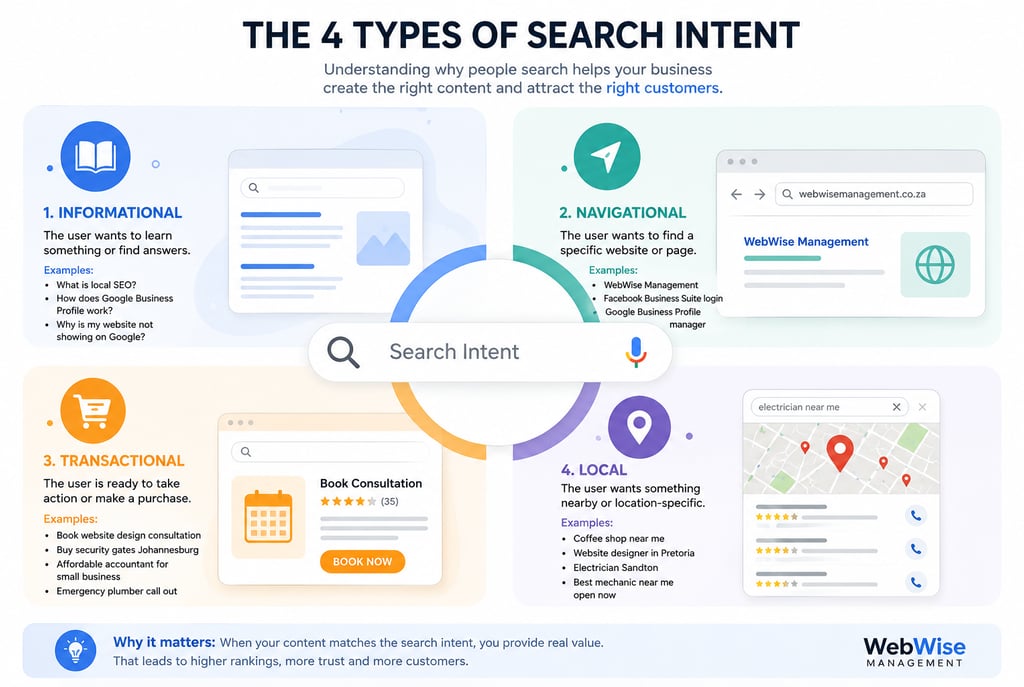
The Four Main Types of Search Intent
1. Informational Intent
Informational searches happen when someone wants to learn something.
Examples include:
“What is local SEO?”
“How does Google Business Profile work?”
“Why is my website not showing on Google?”
These people may not be ready to buy yet, but they are building trust. This is where educational blog posts, guides, FAQs and explainer pages work well.
For a local business, informational content can answer the questions customers ask before they contact you. A dentist might write about “how to know when you need a root canal”. A roofing company might explain “how to spot storm damage on a roof”. A digital agency might publish a guide like this one.
The goal is not to push a sale too early. The goal is to be helpful and clear.
2. Navigational Intent
Navigational intent means the searcher wants to find a specific website, brand or page.
Examples include:
“WebWise Management”
“Facebook Business Suite login”
“Google Business Profile manager”
These searches often involve branded terms. They are important because people already know what they want. Your job is to make sure your business is easy to find, your brand name is consistent, and your key pages are not buried.
For small businesses, this means using the same business name across your website, Google Business Profile, social media profiles and local directories.
3. Transactional Intent
Transactional intent means the person is ready to take action.
Examples include:
“book website design consultation”
“buy security gates Johannesburg”
“affordable accountant for small business”
“emergency plumber call out”
These searches often lead to sales, bookings, calls or quote requests. Your service pages, landing pages and contact pages should be built for this intent.
That means clear service descriptions, pricing guidance where appropriate, strong calls to action, trust signals, testimonials, location details and easy contact options.
4. Local Intent
Local intent happens when the searcher wants something nearby or location-specific.
Examples include:
“coffee shop near me”
“website designer in Pretoria”
“electrician Sandton”
“best mechanic near me open now”
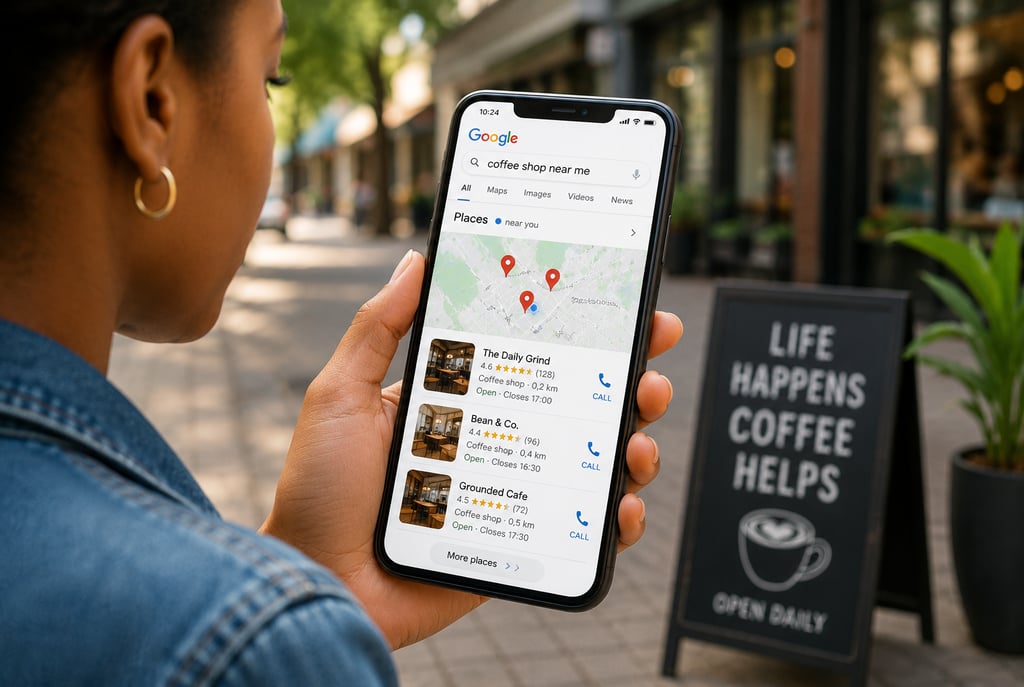
Local intent is extremely valuable because it often comes with urgency. A person searching locally is often comparing options, checking reviews, looking for directions, or deciding who to call.
Google’s own local ranking guidance explains that local results are mainly influenced by relevance, distance and prominence. Google also says complete and accurate Business Profile information helps customers understand what you do, where you are and when they can visit.
Why “Near Me” Searches Matter
“Near me” searches are powerful because they show immediate need.
A person searching “hairdresser near me” may want an appointment soon. Someone searching “towing service near me” may need urgent help. Someone searching “restaurant near me open now” is probably close to making a decision.
Google has reported that searches for “open now near me” grew globally by over 400% year-on-year, showing how strongly people rely on search for real-time local decisions.
Local search behaviour is also being shaped by AI and reviews. Rio SEO’s 2025 local search consumer study found that 84% of consumers search online for local businesses daily, 60% click on AI-generated overviews in Google Search, 75% read at least four reviews before deciding, and 53% say inaccurate listings will drive them away.
For small businesses, this means local SEO is not only about visibility. It is about accuracy, trust and speed.
If your opening hours are wrong, your phone number is outdated, your services are unclear, or your reviews are neglected, you may lose the customer before they even reach your website.
How AI-Assisted Search Changes SEO
Search is becoming more conversational.
Google’s AI Overviews and AI Mode are changing how people explore topics. At Google I/O 2026, Google said AI Overviews had more than 2.5 billion monthly active users and AI Mode had surpassed 1 billion monthly users.
Google also stated in 2025 that AI Overviews were driving more than a 10% increase in usage for the types of queries where AI Overviews appear.
This does not mean traditional SEO is dead. It means useful, well-structured content matters even more.
AI-assisted search often pulls together information from different sources. If your website has clear service pages, specific FAQs, accurate local details, helpful explanations and structured data, it gives search systems more context to understand your business.
For example, a vague page that says “we offer professional services” is not very helpful.
A stronger page says:
“We provide emergency plumbing repairs in Centurion, including burst pipes, blocked drains, leaking geysers and after-hours call-outs.”
That sentence gives search engines and customers far more useful information.
Voice Search and Conversational Questions
Voice search also supports the move from short keywords to natural questions.
A person typing may search “dentist Randburg”.
A person speaking may ask, “Who is the best dentist near me open on Saturday?”
EMARKETER forecast that voice assistant users in the United States will grow from 139.8 million in 2022 to 168.2 million by 2029, showing steady mainstream adoption of voice-based search behaviour.
For local businesses, voice search optimisation is not about tricks. It is about answering real questions clearly.
Good voice-friendly content is:
simple,
specific,
local,
conversational,
and easy to scan.
Instead of only writing “Our plumbing services”, include questions like:
“Do you offer emergency plumbing in Centurion?”
“What areas do you cover?”
“Are you available after hours?”
“How quickly can you respond?”
These are the kinds of questions customers may ask by voice, especially on mobile.
Practical Ways to Optimise for Search Intent
Match Each Page to One Main Intent
Do not make every page do everything.
A blog post should educate.
A service page should explain and convert.
A location page should show local relevance.
A contact page should make the next step easy.
When one page tries to target too many intents, it becomes confusing. Search engines may not know when to show it, and customers may not know what to do next.
Build Better Service Pages
For each main service, create a clear page that explains:
what the service includes,
who it is for,
what problems it solves,
which areas you serve,
what makes your business trustworthy,
and what the customer should do next.
A local electrician should not only have one page called “Services”. They should consider separate pages for emergency electrical repairs, compliance certificates, installations, maintenance and service areas.
Optimise Your Google Business Profile
Your Google Business Profile is often the first thing local customers see.
Make sure it includes:
the correct business name,
accurate phone number,
current opening hours,
service areas,
business categories,
service descriptions,
photos,
reviews,
and regular updates.
Google’s guidance is clear that complete and accurate information helps local visibility and helps customers understand your business.
Use FAQs Based on Real Customer Questions
FAQs are useful because they match how people search.
Examples:
“How much does website design cost?”
“How long does SEO take?”
“Do you work with small businesses?”
“Can you help businesses outside Johannesburg?”
Important note: FAQ content is still useful for users and search understanding, but FAQ schema should not be treated as a guaranteed way to get rich results. Google restricted FAQ rich results in 2023 so they would mainly show for well-known, authoritative government and health websites.
The practical lesson is simple: write FAQs for customers first, not only for search features.
Add LocalBusiness Schema Markup
Schema markup is structured data that helps search engines understand your content. Google explains that structured data helps it understand page content and gather information about entities such as organisations and companies.
For local businesses, LocalBusiness schema can help communicate details such as business hours, departments, and other business information.
Schema does not replace good content. It supports it.
Create Location-Specific Content Carefully
If your business serves multiple areas, create useful location pages.
Avoid copying the same page and only changing the suburb name. That is a common mistake and often creates thin, low-value content.
A good location page should include:
services offered in that area,
nearby suburbs served,
local examples,
common customer needs in that area,
contact details,
and a clear call to action.
Real-World Example
Imagine a small plumbing business in Centurion.
The owner has a basic website with one page called “Plumbing Services”. The page says they are reliable, affordable and professional. Those words sound fine, but they do not match specific search intent.
A better SEO structure would include:
“Emergency Plumber in Centurion”
“Blocked Drain Cleaning in Centurion”
“Geyser Repairs and Replacements”
“Plumber Near Midstream, Irene and Lyttelton”
“Plumbing FAQs”
The Google Business Profile would list emergency plumbing, drain cleaning and geyser repairs as services. The business would add photos of completed work, update trading hours, respond to reviews and answer common questions.
Now, when someone searches “blocked drain plumber near me” or asks by voice, “Who can fix a leaking geyser near me?”, the business gives Google and the customer much clearer signals.
That is search intent in action.
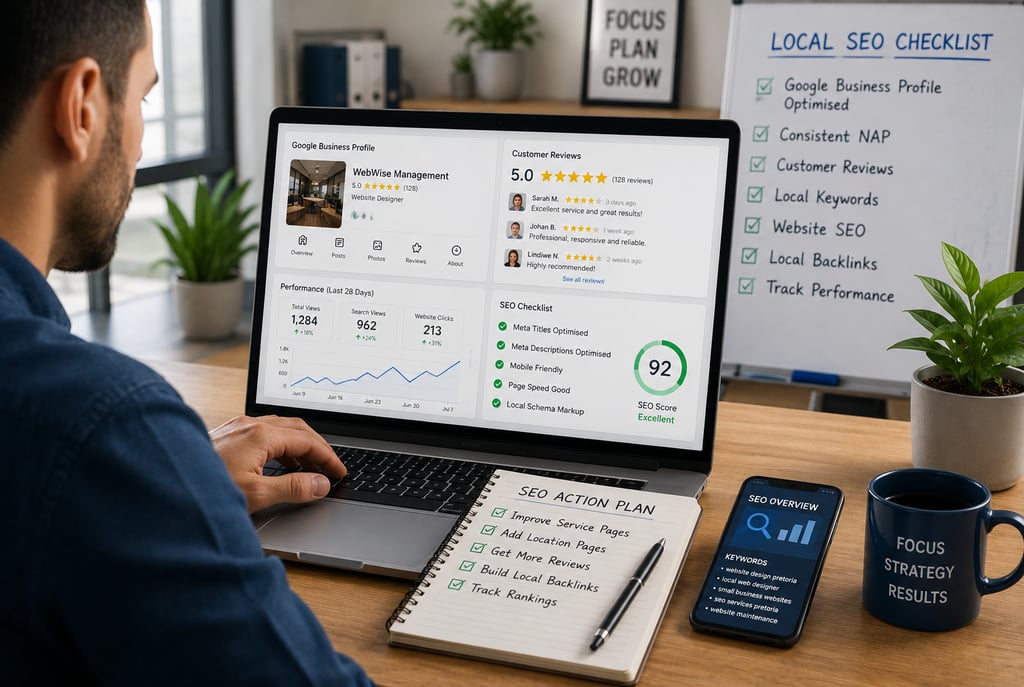
Common Mistake: Optimising for Keywords Without Understanding the Customer
One of the biggest mistakes businesses make is focusing only on keywords.
They may repeat “best plumber”, “best web designer” or “affordable accountant” across a page, but fail to answer what the customer actually needs.
A customer wants to know:
Can you help me?
Are you near me?
Are you open?
Can I trust you?
What will it cost?
What should I do next?
Good SEO answers those questions clearly.
Practical Search Intent Checklist
Use this checklist to review your website and local SEO:
Does each important page match one clear search intent?
Do your service pages explain exactly what you offer?
Do you mention the locations or service areas you cover naturally?
Is your Google Business Profile complete and accurate?
Are your opening hours correct, especially during holidays?
Do you have recent reviews?
Do you respond to reviews professionally?
Do your FAQs answer real customer questions?
Is your website mobile-friendly and easy to contact from a phone?
Have you added appropriate schema markup?
Does every page have a clear next step?
Can a customer understand your business within a few seconds?
Actionable Takeaway
Before writing your next page or blog post, do not start with the keyword.
Start with the customer’s situation.
Ask:
What are they trying to do?
How urgent is the need?
Are they learning, comparing, buying or looking nearby?
What information would help them trust us?
What is the next step they should take?
Once you understand that, the right keywords become easier to use naturally.
Final Thoughts
SEO has moved beyond simple keyword placement.
Today, successful SEO is about matching intent, building trust, answering real questions, and helping customers take the next step with confidence.
For local businesses, this is especially important. “Near me” searches, Google Business Profiles, AI-assisted answers, reviews, FAQs, schema markup and voice search all work together. Your online presence needs to be accurate, useful and easy to understand.
If your business wants to improve its visibility in local search, attract better enquiries and create content that matches what customers are actually looking for, WebWise Management can help.
Contact WebWise Management for practical SEO support that helps your business get found by the right people at the right time.
Contact
Reach out anytime for personalized support.
Email:
Phone:
+27 72 709 7557
© 2026. All rights reserved.